


Dick White Referrals Veterinary Referral Center, (DWR)
Meet The DWR Team
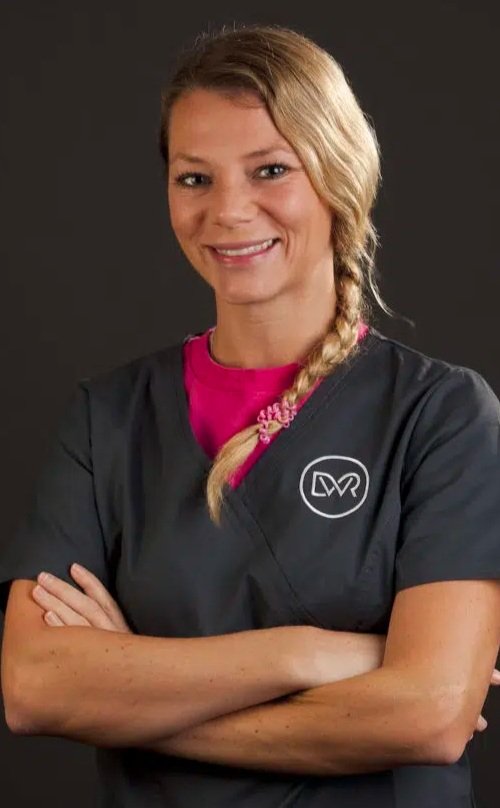
Federico (Freddie) Corletto
PhD CertVA DipECVAA FRCVS
Head of Anaesthesia and Analgesia
DWR Mitral Valve Repair Surgery Overview
Mitral valve repair surgery is performed by the team headed by Dr. Poppy Bristow (Head of Cardiac Surgery) at Dick White Referrals veterinary referral centre in Cambridgeshire, UK.
The heart team consists of numerous specialists and nurses including, Anne Kurosawa (Head of Cardiology), Craig Bailey (Cardiothoracic Nurse), Hayley McDonald and Laurent Locquet (Specialists in Cardiology), Freddie Corletto and multiple critical care and anaesthesia specialists amongst others.
To assess whether your dog is a suitable candidate for surgery DWR will need the following information,
-
Videos, and reports as well as medical records from your specialist cardiologist
-
Full medical records from your primary care veterinarian
-
Results of any recent blood work
-
Copies of any radiographs (X-Rays)
-
A full list of current medication and doses
-
Blood typing test result (if already performed)
They will also need you to fill in a copy of their patient information sheet located on their website, emailing it to them once your cardiologist and primary care vet have sent the above information
-
Please have your cardiologist contact the DWR team via email at, heart.team@dwr.co.uk
Please do not contact the clinic directly until the above information has been completed as they will not be able to respond to any new requests until they have all this information from your cardiologist due to the high demand
It’s best to aggregate all of the records in a shared folder using a file hosting service such as Dropbox or Google Drive or to send the files in a folder via wetransfer.com
Once they have received this information it will take approximately 7-14 working days to get back to you. They will then email you to discuss the next steps which will typically consist of a video consultation
Costs & payment instructions
Note: Please contact DWR for the most up-to-date information on pricing and payment procedures at, heart.team@dwr.co.uk
The cost of the surgery as of 7/21/22 is £17,500 pounds, (21K USD). This covers the costs accumulated from the day of surgery to discharge, pre and post-op checkups, this doesn’t include airlines and hotel costs.
The recommended total stay in the UK is 3 weeks. When you arrive your pre-op exam is typically scheduled a day or two after your arrival, surgery follows a few days after. The post-surgery recovery can last between 7-10 days. Your dog will spend the first 3-5 days after the surgery in the ICU ward, the ICU staff will vigorously monitor your dog during their entire stay at the hospital for signs of any infections, inflammation or any other postoperative possible complications.
Your dog will then will be transferred to the hospitals main ward for further recovery and observation. At the end of the 7-10 day recovery period, your dog will be discharged. It is recommended that you plan to stay another few days after the discharge for at least one follow up visit before your dog is cleared to fly back home.
During your follow up visit the DWR heart surgery team will perform another echocardiogram to determine the healing progress of the repair, analyze residual regurgitation and the effects of the surgery on the size of the heart.
Airline Travel Procedures for US-Based Dogs To The UK
The best way to travel is to fly your dog into the London Heathrow Airport, “The Gatwick and Luton airports do not accept dogs at their terminals”.
“We recommend flying with a direct US based airline, not sponsored by any British Airlines as they don’t seem to be as animal friendly on all flights, so fly American Airlines, United Airlines or Delta directly”
Airline Details:
American Airlines:
Flying with a service animal
Fully-trained service dogs may fly in the cabin at no charge if they meet the requirements.
A service animal is defined as a dog that’s individually trained to do work or perform tasks for the benefit of a qualified individual with a disability, including a physical, sensory, psychiatric, intellectual, or other mental disability, including but not limited to:
-
Visual impairments
-
Deafness
-
Seizures
-
Mobility impairments
-
Post-traumatic stress disorder
”Please note, service animals in training, emotional support animals, and comfort animals may travel as pets, not as service animals. All requirements and applicable fees will apply”.
Forms and advanced notice
To travel with a service animal on flights operated by American, you must submit the U.S. Department of Transportation (DOT) Service Animal Air Transportation Form attesting to the animal’s health, training, and behavior to the Special Assistance Desk at least 48 hours before your flight. We’ll notify you upon document approval.
You can complete the form at the airport if you bought your ticket within 48 hours before the flight. Be sure to arrive early.
DOT Service Animal Air Transportation Form (PDF) Opens a PDF form in a new window.
“If your trip includes a flight on a partner airline you’ll need to contact them and complete all required forms for traveling with a service animal”.
Flights over 8 hours
If you have a flight over 8 hours in your itinerary, the Department of Transportation Service Animal Relief Attestation Sanitation Form is also required stating your animal won’t need to relieve itself or can do so in a way that doesn’t create a health or sanitation issue.
DOT Service Animal Relief Attestation Form (PDF) Opens in a new window
Service Animal ID
Once you’ve submitted your form and it’s been approved, we’ll send you an email with your Service Animal ID (SVAN ID). You can add the SVAN ID when booking future travel with this animal and be approved without re-submitting forms. Keep in mind, your SVAN ID will expire after 1 year from the date of signature or when the animal’s vaccination expires, whichever is first.
Visit American Airlines website for further information HERE
The following procedures below are instructions on how to fly with your dog in the cabin to the London Heathrow Airport.
Step 1: Microchipping
If your dog isn’t microchipped your dog should be implanted with an ISO compliant (11784 and 11785) microchip, ISO compliant microchips are 15 digits long.
Older chips can be read by universal chips readers at the airport; so I would highly recommend not to re-chip your dog. If your dog does have two chips already the number and implant dates of both microchips must be documented on the
Step 2: Rabies vaccination
The rabies vaccination must occur AFTER the microchip implantation. It may be administered the same day as the microchip implantation but any rabies vaccination before a microchip is implanted is invalid.
The number and implantation dates of both microchips must be documented on the USDA form and at least one of these microchips must have been implanted before your pet’s most recent rabies vaccine.
Vaccinations valid for 1 year are acceptable. 2 or 3-year re-vaccinations are only acceptable if you can document previous vaccinations and all re-vaccinations since then. If the current vaccine is older than 1 year and you cannot document the entire history of rabies vaccinations, you will have to re-vaccinate before the UK trip and ideally, before getting the USDA forms, “If the rabies vaccination is new, you must wait 21 days before entering the UK”
Step 3: EU Health Certificate
Have a USDA accredited veterinarian perform an exam and prepare the USDA form exactly ten (10) days before your arrival into the UK. Make sure that your veterinarian includes the name of the rabies vaccination product on the form. Have your vet make two copies of the form if your sending it overnight to the USDA office, just in case it gets lost you can save valuable time.
Step 4: USDA Approval
The USDA approval can be done in person at your local USDA office. If you prefer to handle the approval in person, you must bring your dog’s rabies vaccine certificates for all rabies vaccinations documented on the health certificate. These vaccination certificates will be required by the USDA at the time of health certificate endorsement. Make an appointment at the closest USDA office well in advance.
If you cannot go to a USDA office in person, you can overnight the original USDA form that was prepared by the veterinarian to the nearest regional USDA office along with all supporting documentation. Enclose in the envelope a pre-paid overnight-shipping envelope and a check payable to the USDA in the amount of $38. See the USDA user fee page for more details. You can also pay the fee with a credit card over the phone.
You should receive the final USDA-endorsed forms 2-3 days after you overnight the forms to their office.
Please note: The EU health certificate is valid for travel within the EU for up to 4 months from the date it is issued by the USDA Accredited Veterinarian as long as the rabies vaccine documented on the form has not expired.
Step 5: Notify HARC
Email the Heathrow Animal Reception Center (HARC) at harc@cityoflondon.gov.uk and include the following information:
-
Scanned copy of your USDA form as prepared by your veterinarian. It does not need to be endorsed by the USDA yet.
-
Scanned copy of your most recent rabies vaccination certificate.
-
PNR number of your flight, i.e., the booking reference number, usually a combination of 6 letters and/or numbers.
-
Letter from a physician, a training certificate or a registration card to demonstrate that the dog is an PSA or Service Animal.
If you need any further information, review the center’s website or talk to a representative on the phone at +44-20-8745-7894. They are open 24 hours, year around.
Once the HARC reviews your documentation, they will email you a confirmation that your documentation is in order. You will then need to call them on the phone to make a credit card payment. The fee, as of April 2018 is £366.
Please Note: HARC requires at least 72 hours notice before your scheduled departure to issue your pre-approval letter.
Step 6: Preparing to fly with your dog
The HARC will issue a pre-approval letter for traveling with your dog, usually within 24 hours of receipt of payment. Contact your airline and provide the pre-approval letter. You will also need to fill out the airline-provided forms to document that the dog is an PSA/Service animal. You may need a letter from a physician to document that your dog is an PSA/Service animal.
Note that Airlines usually require that all documentation be submitted at least 48 hours before your flight. Some airlines also require other forms such as proof of training and other safety-related documentation. The HARC will also require a letter from your physician, a training certificate, or a registration card to document that your dog is an PSA/Service animal.
Once the airline approves and manifests your dog, call their Accessibility desk to request the most appropriate seat for someone flying with a dog. If flying economy, request that you get a bulkhead seat, at the front of the economy section. On most planes, the bulkhead seats have the most space in front of your seat, often sufficient for other passengers sitting next to you to be able to get out of their seat without disturbing your dog.
Step 7: Tape Deworming
Schedule tape deworming of your dog with your USDA-accredited veterinarian to be performed no less than 24 hours and no more than 120 hours (5 days) before your arrival to the UK. The tapeworm treatment needs to contain the active ingredient praziquantel. Bring the USDA-endorsed forms to the veterinarian office; the veterinarian needs to include the tape deworming details in the final version of the USDA forms.
Step 8: USA TO UK
When flying to the UK, bring your original USDA-endorsed forms, a copy of your rabies certificate and a copy of all of the documentation provided to the airline to document your dog as an PSA/Service animal.
Upon arrival in the UK, staff from the Heathrow Animal Reception Centre (HARC) will wait for you at the gate. If they are not there, do not leave the gate. You may call the HARC on the phone to notify them that you have arrived and someone should be at the gate promptly. The HARC staff will review all of your documentation and issue a customs clearance letter that you will need to provide at customs, after clearing through immigration. It is recommended that your PSA/Service animal wears a clearly marked service vest to expedite processing through immigration and customs.
Step 9: Immigration
Clear immigration as usual. Be prepared to show your USDA form and the clearance letter from the HARC. Once you clear immigration, take the “have something to declare” lane and walk to customs. If no one is there, use the phone on the wall to call them. Someone will come by and review the letter that the HARC provided you. You will now be officially cleared to depart from the terminal.
Do not surrender any of the forms you bring with you. Any officials that request them should simply review them and then return them to you. You will especially need your USDA forms upon your return to the US. Be prepared to be routed to the agricultural inspection line where your entire luggage will be inspected using the USDA X-ray machines.
Note: These requirements can change without notice so visit the USDA website to verify all steps before proceeding.
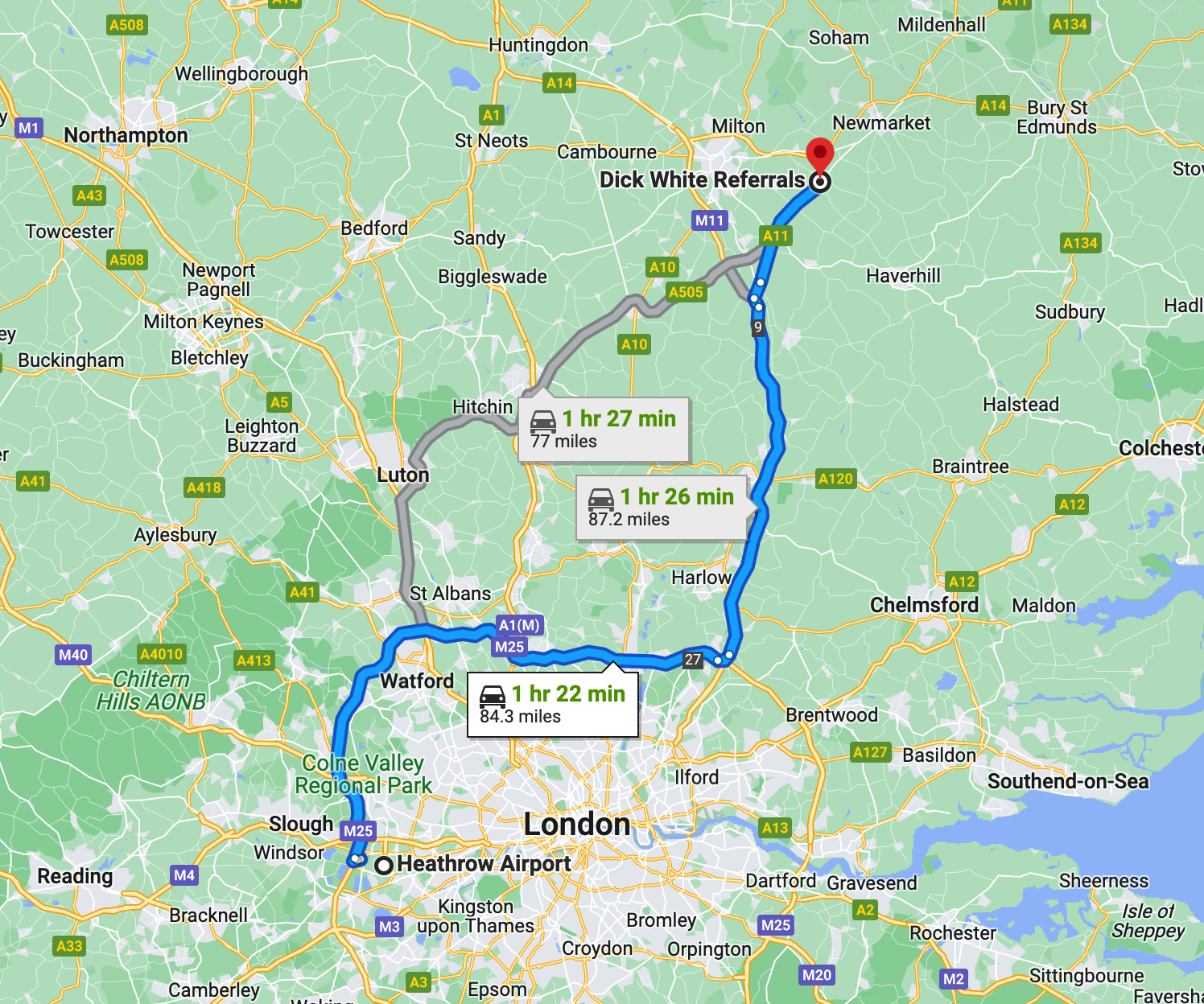
Heathrow Airport to the RVC clinic
Planning Your UK Lodging Stay
Many hotels in the UK are pet friendly. Most hotel chains will also honor service dogs and accept their stay regardless of their pet policy. It is recommended that you use a hotel or an apartment that has a refrigerator to allow for storage of food or/and treats used to administer medications (if needed).
One such serviced apartment many families have used is Harpenden House Serviced Apartments. Tony has been very kind to our Mighty Hearts families and has put together this document with great information if you should wish to use his services.
Given the (rural) location of the DWR hospital, some families have rented a car. Please drive slowly on the local roads; they tend to be very narrow and sometimes require taking turns at crossing narrow bridges or single-car passageways, not to mention driving is on the left side. It is recommended that you rent a small, automatic transmission car, otherwise use a car service or local trains.
Many hotels will provide a breakfast option. There are many restaurants and pubs that will let you bring your dog for lunch or dinner. See the Doggie Pubs for a list of dog-friendly restaurants and pubs.
Bring some of your dog’s food with you to more easily transition them to any local foods you may end up using after the surgery. Avoid any dietary changes right before the surgery; it can cause diarrhea which can further complicate the surgery and the recovery process.
Keep in mind that the UK uses a special, three blade Type G power plug and 220V electricity. Make sure that all electrical appliances you intend to bring are dual voltage (110V/220V) and that you bring at least one Type G adapter. The easiest thing to do is to buy one Type G adapter and a 110V/220V power strip. This way you adapt the power strip and then can plug in all of your (dual-voltage) appliances directly into the power strip. Note that a typical power strip you buy at a hardware store is not 110V/220V compliant – they typically only work with 110V. The power strip has to be specifically advertised as 110V/220V compliant. Here is one from Amazon.
Transportation from The Airport:
We recommend these Car Services to pick you up from the airport, Many families have used their services and loved them.
Other Helpful Tips:
>> Most collapsible strollers do not stay in a tidy compact position for stowing at the gate. It is helpful to have a velcro strap, small bungee cords, or twist ties with you to help secure the stroller so that it does not get damaged.
>> If you choose to bring a pet carrier in the event your flight crew wants your dog to be stowed for takeoff/landing, verify the maximum dimensions with your airline.
>> A pet carrier is required for travel to and from Japan and Heathrow airports (enclosed strollers work while in airport).
>> Secure money before leaving the US because not all ATMs are open 24×7 at the airport. You may need money to pay for transportation or money may be needed if you encounter an emergency.
>> You will need to pack for a full three weeks, but consider packing a small quantity of the following items as carry-on to get you through your flight: food, treats, waste bags, diapers, pee pads, and medications.
>> Diapers are helpful on the plane if your dog is not trained to use a pee pad. You can use baby diapers and cut a hole out for the tail as a cheaper solution to specialty dog diapers.
>> Research relief area options for the airports you will be using Pet Friendly Travel.
>> It is important to keep your dog calm on the flight. Your cardiologist can work with you and a holistic veterinarian to determine the most appropriate method for your dog to remain calm, given their heart condition. Caution the use of any sedatives, please if you must look into holistic care options, test in stressful situations before ever going on an airplane.
>> When you enter security, you will usually be given two options: a) either walk through the metal detector with your dog on leash and then get patted down by a security official or b) if your dog is well trained, you can remove the leash and collar, insert them into a basket that goes through the x-ray machine, then walk through the metal detector by yourself and call your dog to follow you behind.
Please check out our helpful packing list,